
Ame-no-Koyane
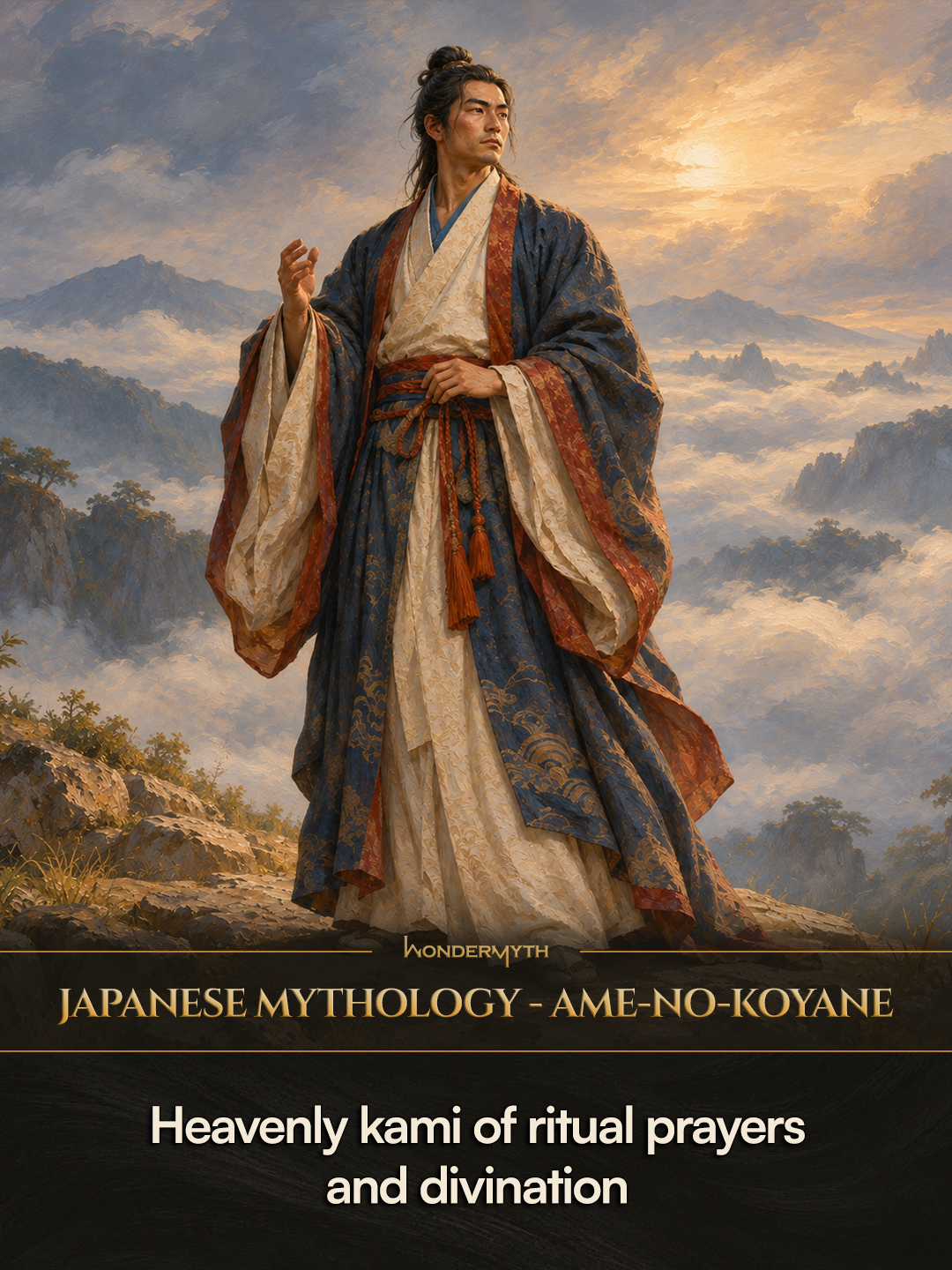
Ame-no-Koyane recited sacred words while the gods tried to draw Amaterasu out of the Heavenly Rock Cave and restore light to the world. He later accompanied Ninigi’s descent from heaven to earth. These episodes identify him as a heavenly ritual specialist and an ancestor of the Nakatomi lineage.
Table of Contents
Table of Contents
Who Was Ame-no-Koyane?
Among the heavenly kami, Ame-no-Koyane was distinguished by the formal words he spoke during sacred rituals. When Amaterasu withdrew into the Heavenly Rock Cave, the gods’ plan combined divination and ritual offerings with dance and physical strength. Ame-no-Koyane’s task was to recite the solemn liturgy while Futodama held the offerings. His words formed part of a coordinated effort, rather than a spell that compelled the sun goddess to emerge.
The Kojiki later named him among the five deities who accompanied Ninigi and identified him as an ancestor of the Nakatomi. This connection placed his earlier ritual role within the mythic ancestry of Japan’s court ritual specialists. He also became an important deity in the religious traditions of the Nakatomi and Fujiwara clans.
Domains, Appearance & Symbols
Domains & Roles
Ame-no-Koyane’s mythic duties center on formal prayer, divination, and attendance on the heavenly descendants. At the Rock Cave, he recited sacred liturgy while Futodama held the offerings. In a Nihon Shoki version of Ninigi’s descent, the two gods received further responsibilities involving divine service and safeguarding Amaterasu’s mirror. The mirror remained a shared sacred object, not Ame-no-Koyane’s personal possession.
Appearance
In a fourteenth-century Kasuga Jizō mandala, the deity of Kasuga’s third sanctuary, Ame-no-Koyane, was represented through the Buddhist bodhisattva Jizō. Related medieval art portrayed Jizō as a monk standing on a lotus, holding a jewel and a staff. These images reflect the period’s blending of kami and Buddhist worship, not a fixed appearance established by the earliest myths.
Symbols
His identifying attributes are chiefly ritual actions rather than personal weapons or sacred objects.
- Solemn liturgy: At the Heavenly Rock Cave, he recited the futonoritogoto, formal sacred words spoken as part of the gods’ ceremony.
- Divination: He and Futodama used materials from heavenly Mount Kagu in the rites carried out before the cave.
Key Myths
The Prayers at the Heavenly Rock Cave
Susanoo threw a flayed horse into Amaterasu’s weaving hall, fatally injuring a weaving woman. Amaterasu hid in the Heavenly Rock Cave, leaving heaven and earth dark. Following Omoikane’s plan, Futodama held ritual offerings while Ame-no-Koyane recited solemn liturgy. Ame-no-Uzume danced, exposing her breasts and lowering her skirt, and the gods laughed. Amaterasu opened the door, and Ame-no-Koyane and Futodama presented a mirror. As she moved closer, Ame-no-Tajikarao pulled her outside. Futodama stretched a rope behind her, and light returned.
Ame-no-Koyane and the Descent of Ninigi
When the heavenly gods sent Ninigi to earth, Ame-no-Koyane accompanied him as one of five principal attendants. The others were Futodama, Ame-no-Uzume, Ishikoridome, and Tamanoya. Ninigi also received sacred regalia before his descent. The Kojiki identifies Ame-no-Koyane as an ancestor of the Nakatomi, the lineage associated with court ritual service. His part in the descent connects his heavenly ritual duties with the ancestry claimed by an earthly clan.
Worship & Ancient Impact
Ame-no-Koyane was honored at Hiraoka Shrine in present-day Osaka, a center of Nakatomi ancestral worship recorded in the Engishiki shrine register. Kasuga Taisha in Nara, whose traditional foundation dates to 768 CE, became closely tied to the Fujiwara clan.
At Kasuga, Ame-no-Koyane occupies the third of four main sanctuaries, while Himegami occupies the fourth. The other two belong to Takemikazuchi and Futsunushi. The Kasuga Festival includes prayers for national peace and prosperity and the participation of an imperial representative. These rites belong to the historical shrine tradition rather than being exact reenactments of the Rock Cave ceremony.
Modern Influence
In the late nineteenth century, Japanese artist Kōno Bairei revisited the Heavenly Rock Cave story in a work titled Luring the Sun Goddess Amaterasu Out of a Cave with Music; Death of the Historical Buddha. The Metropolitan Museum of Art preserves this work, although its description does not separately identify Ame-no-Koyane among the figures in the scene.
Today, museum collections continue to preserve and interpret Kasuga imagery, including medieval mandalas that document Ame-no-Koyane’s association with Jizō. These works offer a record of how the deity was represented within Japan’s changing religious and artistic traditions.
Free Mythic Guide to
Resourcefulness